
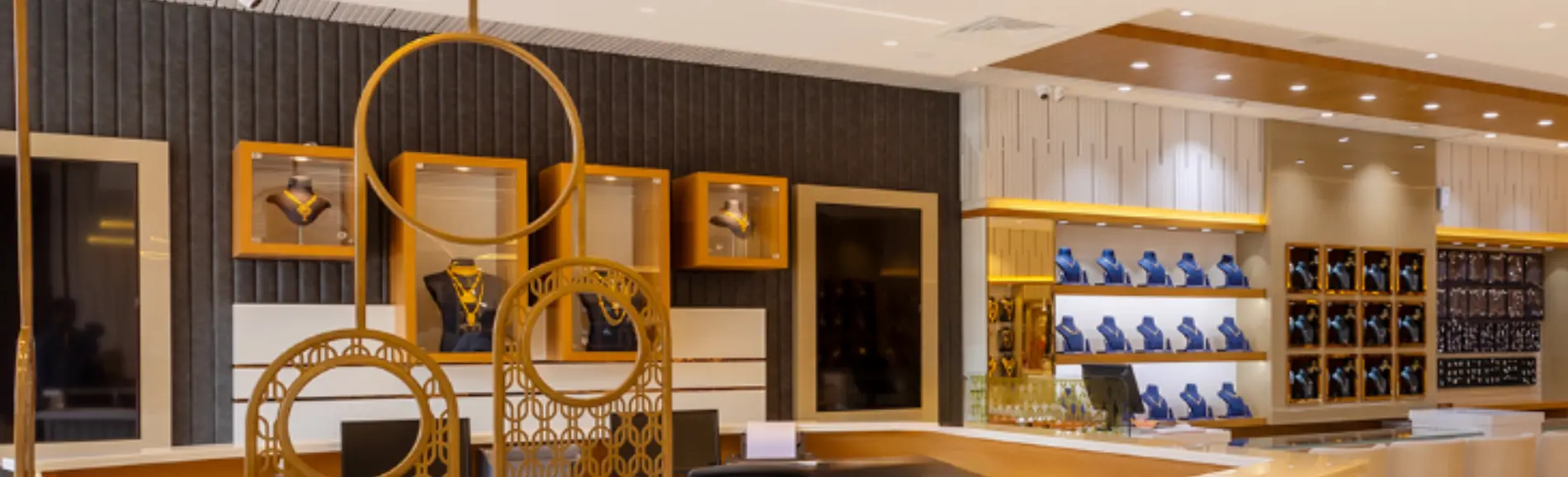
In jewellery store interior design, display counters are not just functional elements, they are silent sales tools. Customers don’t consciously analyze materials, but they instantly feel quality. And that feeling directly impacts whether they trust your pricing.
A poorly designed counter can make even premium jewellery look average. On the other hand, the right material choices can elevate perceived value without changing a single product.
This is where most store owners get it wrong, they either overspend on the wrong elements or cut costs in areas that actually influence buying decisions.
Why Material Selection Matters More Than You Think
When a customer approaches your display counter, three things happen within seconds:
-
They judge your brand quality
-
They decide if your pricing is justified
-
They feel either comfortable or hesitant to engage
All of this is heavily influenced by materials, finishes, and detailing.
In effective jewellery store interior design, materials are chosen not just for looks, but for how they interact with lighting, reflections, and product visibility.
Luxury Materials: Built for High-Value Perception
Luxury jewellery stores don’t randomly pick materials, they use combinations that enhance brilliance, depth, and exclusivity.
Tempered Glass for Maximum Visibility
High-quality tempered glass is essential in premium counters. It allows jewellery to be viewed clearly without distortion while maintaining durability.
Low-quality glass creates reflections and reduces sparkle. That alone can reduce perceived product value.
Marble for Authority and Permanence
Marble, especially white or black, instantly communicates luxury. It’s commonly used for counter tops and base structures because it adds weight and presence to the space.
Customers associate marble with high-end environments, which subconsciously justifies higher pricing.
Brass and Metallic Accents for Warmth
Brass or gold-finished metals are used in trims and structural detailing. These elements reflect light subtly and complement gold jewellery perfectly.
Cheap metallic coatings fade quickly and break the entire luxury illusion—this is a common mistake in mid-range stores trying to “look premium.”
Velvet and Suede for Display Surfaces
The interior of the counter matters just as much as the exterior. Velvet or suede surfaces enhance contrast and make diamonds and gold stand out.
Soft materials also prevent scratches and improve handling experience.
Solid Wood for Depth and Craftsmanship
Wood adds richness and authenticity. It works especially well in boutique-style stores or heritage jewellery brands.
However, the finish must be clean and polished. Rough or inconsistent woodwork instantly lowers perceived quality.
Budget Materials: Where to Save Without Looking Cheap
Not every store needs marble and brass everywhere. The key is knowing where you can reduce cost without killing the premium feel.
MDF with Laminate Finish
This is the most common budget-friendly option. When done right, laminates can replicate wood or matte finishes effectively.
The problem is execution, cheap glossy laminates scream “low-end.” Matte or textured finishes work far better.
Engineered Stone Instead of Marble
Quartz or engineered stone gives a similar visual effect to marble at a lower cost. It’s also easier to maintain.
For most mid-range stores, this is a smarter investment than real marble.
Powder-Coated Metal Frames
Instead of brass, powder-coated metals can be used in neutral tones like black or champagne.
They don’t have the same richness, but they still maintain a clean and modern look.
Standard Glass with Proper Lighting
If anti-reflective glass is too expensive, standard glass can still work, but only if lighting is done correctly.
Bad lighting + standard glass = poor visibility and weak product presentation.
The Biggest Mistake Store Owners Make
They focus on materials individually instead of how everything works together.
You can use budget materials and still create a premium feel if:
-
Lighting is properly designed
-
Colors are controlled and minimal
-
Finishes are consistent
And you can spend a fortune on luxury materials and still fail if:
-
The layout is cluttered
-
Lighting is flat
-
Materials don’t complement each other
Final Thoughts
The goal of jewellery store interior design is not just to make the store look good; it’s to make the jewellery look more valuable than it actually is.
That’s the real job of your display counter. Luxury materials give you an advantage, but smart combinations matter more than price alone. If your design doesn’t enhance visibility, contrast, and perception, you’re leaving money on the table.